Fritz Haber


Science

Featured Today
Science
Fritz Haber Science
Eugène Fromentin Lit.West
Dmitry Bortniansky Music.West
Pierre Curie Science
Henrik Dam Science
a German chemist who received the Nobel Prize in Chemistry in 1918 for his invention of the Haber–Bosch process, a method used in industry to synthesize ammonia from nitrogen gas and hydrogen gas.
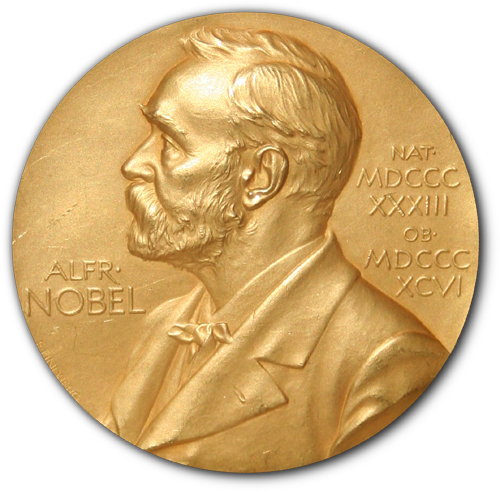
For much more information, also see
Born
9 December 1868 Breslau, Prussia (now Wrocław, Poland )
Died
29 January 1934 (aged 65) Basel, Switzerland
Nationality
German
Known for
Surface chemistry Haber process Haber's rule Haber–Weiss reaction Born–Haber cycle Chemical warfare Explosives Fertilizer Second Battle of Ypres
Fields
Physical chemistry
Alma mater
Heidelberg University Humboldt University of Berlin Technical University of Berlin
Awards
Iron Cross (1915) Nobel Prize in Chemistry (1918) Foreign Associate of the National Academy of Sciences (1932) Rumford Medal (1932)
Institutions
Swiss Federal Institute of Technology University of Karlsruhe
Spouse(s)
Clara Immerwahr (1901–1915; her death; 1 child) Charlotte Nathan (1917–1927; divorced; 2 children)
adultbasic
Germany
Doctoral advisor
Carl Theodore Liebermann
era
1800+