Albert Einstein


Science

Featured Today
Lit.West
Karel Čapek Lit.West
Karl von Frisch Science
Carl von Linde Science
Beno Gutenberg Science
Albert Einstein Science
a German-born theoretical physicist, widely acknowledged to be one of the greatest and most influential physicists of all time
For much more information, also see
Born
14 March 1879 Ulm, Kingdom of Württemberg, German Empire
Died
18 April 1955 (aged 76) Princeton, New Jersey, U.S.
Known for
General relativity, Special relativity, Photoelectric effect, E=mc2 (Mass–energy equivalence), E=hf (Planck–Einstein relation), Theory of Brownian motion, Einstein field equations, Bose–Einstein statistics, Bose–Einstein condensate, Gravitational wave, Cosmological constant, Unified field theory, EPR paradox
Fields
Physics, philosophy
Awards
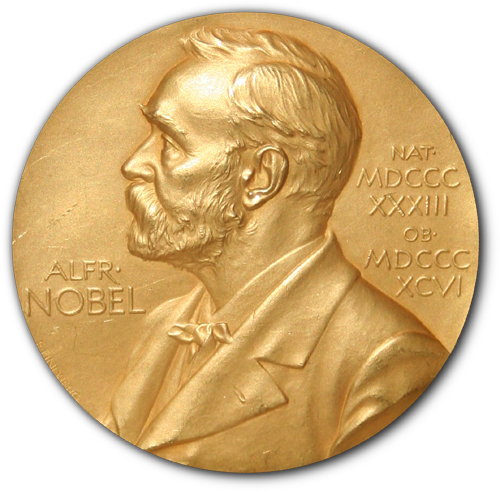
Barnard Medal (1920), Nobel Prize in Physics (1921), Matteucci Medal (1921), ForMemRS (1921)[3], Copley Medal (1925)[3], Gold Medal of the Royal Astronomical Society (1926)[4], Max Planck Medal (1929), Member of the National Academy of Sciences (1942)[5], Time Person of the Century (1999)
Institutions
Swiss Patent Office (Bern) (1902–1909), University of Bern (1908–1909), University of Zurich (1909–1911), Charles University in Prague (1911–1912), ETH Zurich (1912–1914), Prussian Academy of Sciences (1914–1933), Humboldt University of Berlin (1914–1933), Kaiser Wilhelm Institute (director, 1917–1933), German Physical Society (president, 1916–1918), Leiden University (visits, 1920), Institute for Advanced Study, Princeton University (1933–1955), California Institute of Technology (visits, 1931–1933), University of Oxford (visits, 1931–1933)
adultbasic
Switzerland
Citizenship
Kingdom of Württemberg, part of the German Empire (1879–1896)[note 1], Stateless (1896–1901), Switzerland (1901–1955), Austria, part of the Austro-Hungarian Empire (1911–1912), Kingdom of Prussia, part of the German Empire (1914–1918)[note 1], Free State of Prussia (Weimar Republic, 1918–1933), United States (1940–1955)
Doctoral advisor
Alfred Kleiner
Education
Federal polytechnic school in Zurich (Federal teaching diploma, 1900), University of Zurich (PhD, 1905)
era
1800+
Influenced
Virtually all modern physicists
Influences
Arthur Schopenhauer, Baruch Spinoza, Bernhard Riemann, David Hume, Ernst Mach, Hendrik Lorentz, Hermann Minkowski, Isaac Newton, James Clerk Maxwell, Michele Besso, Moritz Schlick, Thomas Young, Gottfried Wilhelm Leibniz
Other academic advisors
Heinrich Friedrich Weber
Thesis
Eine neue Bestimmung der Moleküldimensionen (A New Determination of Molecular Dimensions) (1905)